VR Experiences and 360 Virtual Tours for Real Estate
Interface Multimedia is a VR experience company in Washington, DC.
As a virtual reality real estate studio, Interface has made VR experiences for Monday Properties, Hoffman Madison Waterfront, Skanska, and Kettler.
How Virtual Reality for Real Estate Lets a Client Show Prospects a Space Before It Is Ready
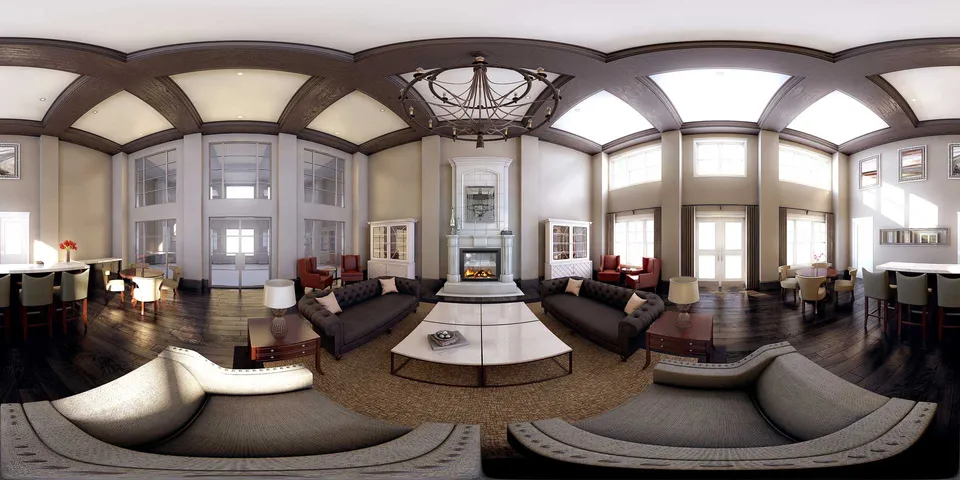
Virtual reality lets a prospective tenant or resident walk through a lobby, a model apartment, or an amenity floor before construction starts, looking wherever they choose. Interface Multimedia makes virtual reality real estate tours, 360 virtual tours, and 360 films for developers, owners, brokers, architects, and other AEC firms, working from the same 3D models it uses for architectural renderings and animation.
Interface was founded by architects in 1993 and has worked on more than 2,000 projects since. What a client needs a tour to show depends on the stage its project has reached: homes and amenities in a building that has not been built yet, office floors that are empty or being renovated, or a portfolio of buildings that brokers need to compare. The finished tour goes wherever the client's leasing or sales team needs it: onto a property website, onto a tablet in a meeting, or into a headset.
Letting a Developer's Sales and Leasing Teams Show Homes Before the Building Is Finished
A sales or leasing team for a new condominium or apartment building has to show the homes long before there is a model unit to walk through: the layout of each unit type, the finishes, the view from a high floor and the amenity spaces residents will share.
Hoffman Madison Waterfront asked Interface for a complete visualization of Amaris, its condominium at The Wharf designed by Rafael Viñoly. Before the building was finished, Interface made VR tours of the typical units and every penthouse for the sales team, along with a VR tour of the featured amenities, animated 360 VR tours and a brand film. For Kettler Properties at Union Heights on the H Street corridor, Interface produced renderings, 3D floor plans and VR tours of the new apartments. Our floor plans for real estate page covers the unit plans, and our multifamily marketing page the naming, website and campaign that lease a new building.

Marketing an Office Owner's New Spaces to Prospective Tenants Before They Are Built
Interface has seen more office owners add a conference center or a tenant lounge, finished to a high standard and placed where the views are best, as a benefit for every tenant in the building. The owner then needs to market those spaces to prospective tenants before construction starts, and a VR tour lets a prospective tenant look around the finished rooms on a screen or in a headset.
At 1000 Wilson Boulevard in Arlington, Monday Properties planned a new conference facility: a large conference room that divides into several configurations, private boardrooms, and lounge space with views of Washington across the Potomac River. Interface made a VR tour and a set of illustrations of the new amenities for the leasing team to market them ahead of construction. For Hoffman Madison Waterfront, Interface made virtual reality panoramas of the arrival area at 670 Maine Avenue, the office building SHoP Architects designed for the developer with views out to the Washington Channel, so that potential tenants could look around the place where they would arrive and see where it leads. The arrival area is a porte cochere, a covered drop-off that 670 Maine shares with 680 Maine Avenue, with a grove of trees beneath an opening in its ceiling, the oculus. From there a tenant can enter the lobby of either building, one on each side, or walk across toward the waterfront.

Showing Tenants and Brokers What an Owner's Empty Floor or Renovated Lobby Could Look Like
The owner of an office building that is already standing has a different problem. A prospective tenant touring an empty floor sees the views and the window line but not how the space could be used, and current tenants walking through a lobby under renovation see only construction.
At 1812 North Moore in Rosslyn, Monday Properties' leasing team asked Interface for tours that would show how versatile the building's floor plates are. Interface combined photography of an empty floor with a conceptual build-out that showed the core, the views and the window line. In the early days of the Covid pandemic, those tours made remote showings possible. At 1100 North Glebe, Monday Properties showed its current tenants and interested brokers the extensive renovation of the entry level with renderings and a VR tour that Interface made, in which the viewer moves from one fixed viewpoint to the next and looks around from each. For BXP (Boston Properties), Interface illustrated and programmed a VR tour of the lobby renovation Sasaki designed at 901 New York Avenue in Washington.

Putting an Owner's Buildings Online for Brokers to Tour and Compare
An owner with office space to lease needs brokers to find and compare its buildings before they book a visit. A leasing website can hold the VR tours, floor plans and walkthroughs of every building the owner has, so that a broker can compare them from a desk.
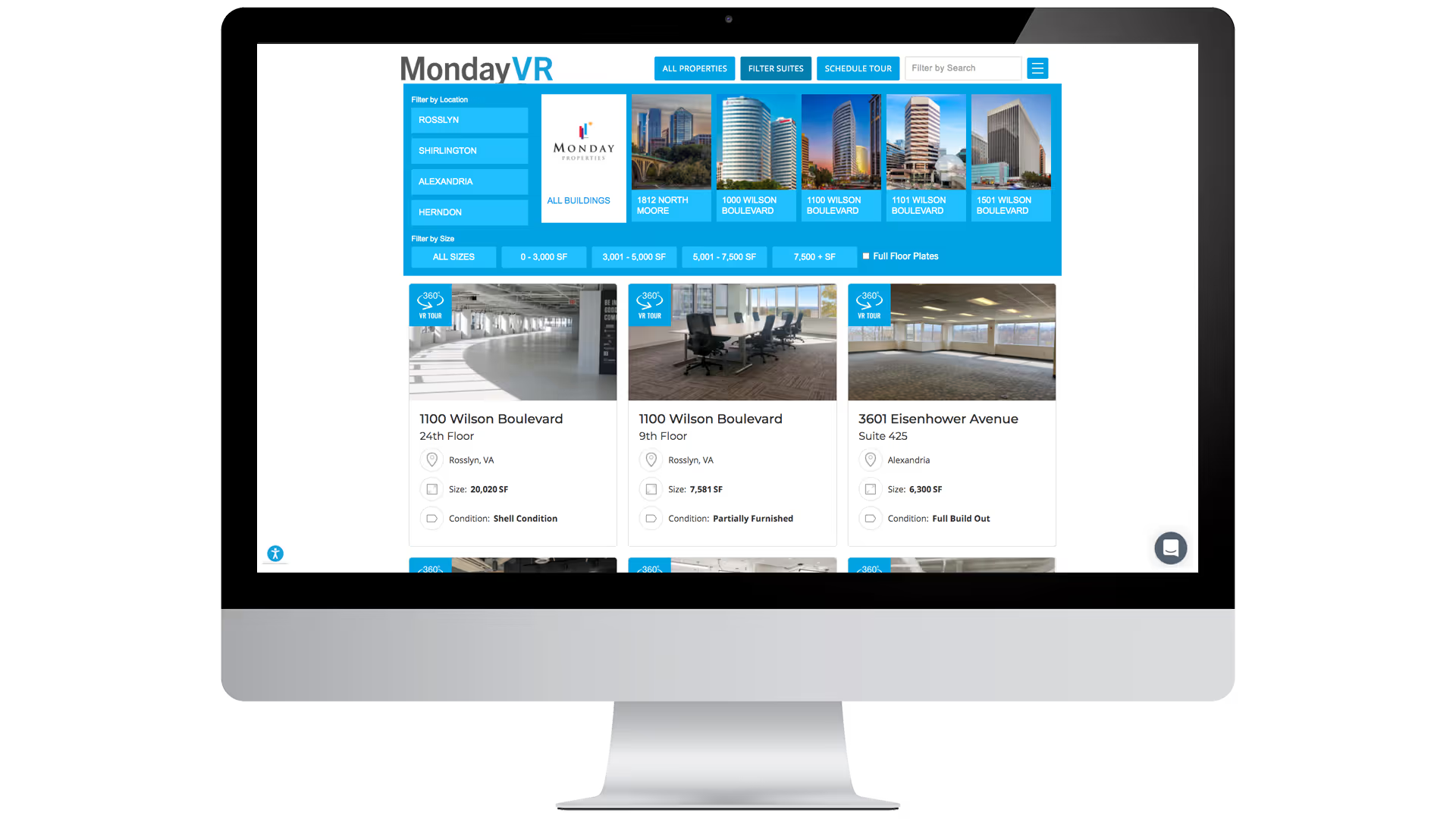
Monday Properties brought its Northern Virginia office portfolio online through MondayVR, a leasing website Interface built with VR tours of more than 4 million square feet of office space, high-resolution aerial photography and 3D animated walkthroughs. Every tour comes with live chat or the option to set up a custom tour with a leasing representative. For Skanska, Interface built the 1800 Chain Bridge Road website, whose VR tours, 3D walkthroughs and integrated floor plans let brokers explain the site's parking and the development planned around it. Our web design page covers more of these websites.
360 Films and VR Movies That Show a Client's Prospects and Audience a Space Before It Is Finished
A client uses a 360 film when the people it needs to reach cannot yet see a space as it will be, and should see it in the order they would walk through it: from the street through the lobby to the amenity floor, or along a renovated shopping concourse. The film carries the viewer along that route.
Forest City Washington needed retailers to lease stores in Ballston Quarter, the reimagined Ballston Mall in Virginia, before they could see the new mall. Interface produced an animated 360 VR tour that Forest City's leasing team played on iPads to walk retailer prospects through the entire renovated mall. Interface had only a merchandising plan to work from, so it designed the storefronts, the lighting and the people in each scene itself.
While Capital One Hall, a performing arts venue in Tysons, was still under construction, ASM Global needed to reach promoters of many kinds of shows, and those promoters wanted to see what the venue would look like. Interface made virtual tours of the venue for a virtual 360 grand opening, which could be taken on a phone screen or in a pair of VR goggles. The tours also showed the route through the building to spaces that were hard to understand from the architectural drawings, such as The Vault, a theater set deep inside the building.

Showing Parexel's Sponsors and Investors a Clinical Unit Few of Them Will Visit
Parexel runs an early phase clinical unit in Baltimore that few of its sponsors and investors will visit in person. Interface produced a four-minute narrated 360 film of it, from storyboard to 8K post-production, and directed the drone capture on site. The film opens with an aerial approach over the Patapsco River, then walks the viewer into the screening area, a quiet room, the laboratories and the flexible wards.
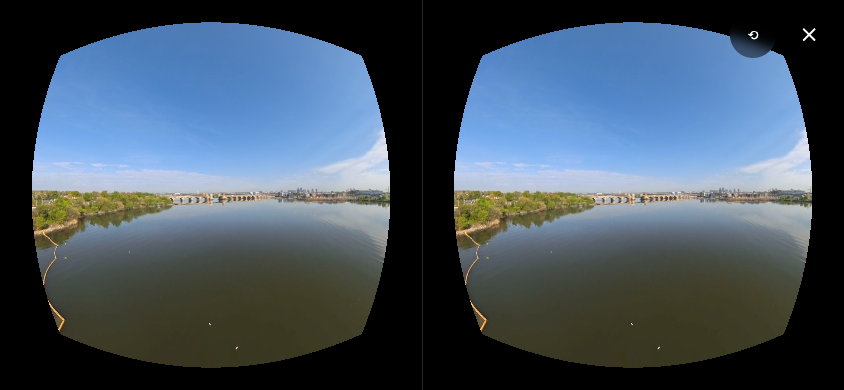
Parexel wanted the film seen two ways: on its website, and inside a cardboard headset mailed to prospects. Safari has no built-in way to view virtual reality, YouTube dropped its VR mode in 2024, and Google stopped developing its Cardboard software in 2023, so Interface built the viewer itself. One link plays the film as a drag-to-look tour on a desktop or phone, or as a split-screen view in the headset, corrected for the lens and adjusted to each phone, with no app to install and no login. Parexel published the film on its own website in July 2026. The Innovation Lab's 360° video and immersive VR page covers the capture and streaming pipeline behind it.
Real-Time Tours That Show Planners, Tenants and the Public a Redevelopment as It Grows
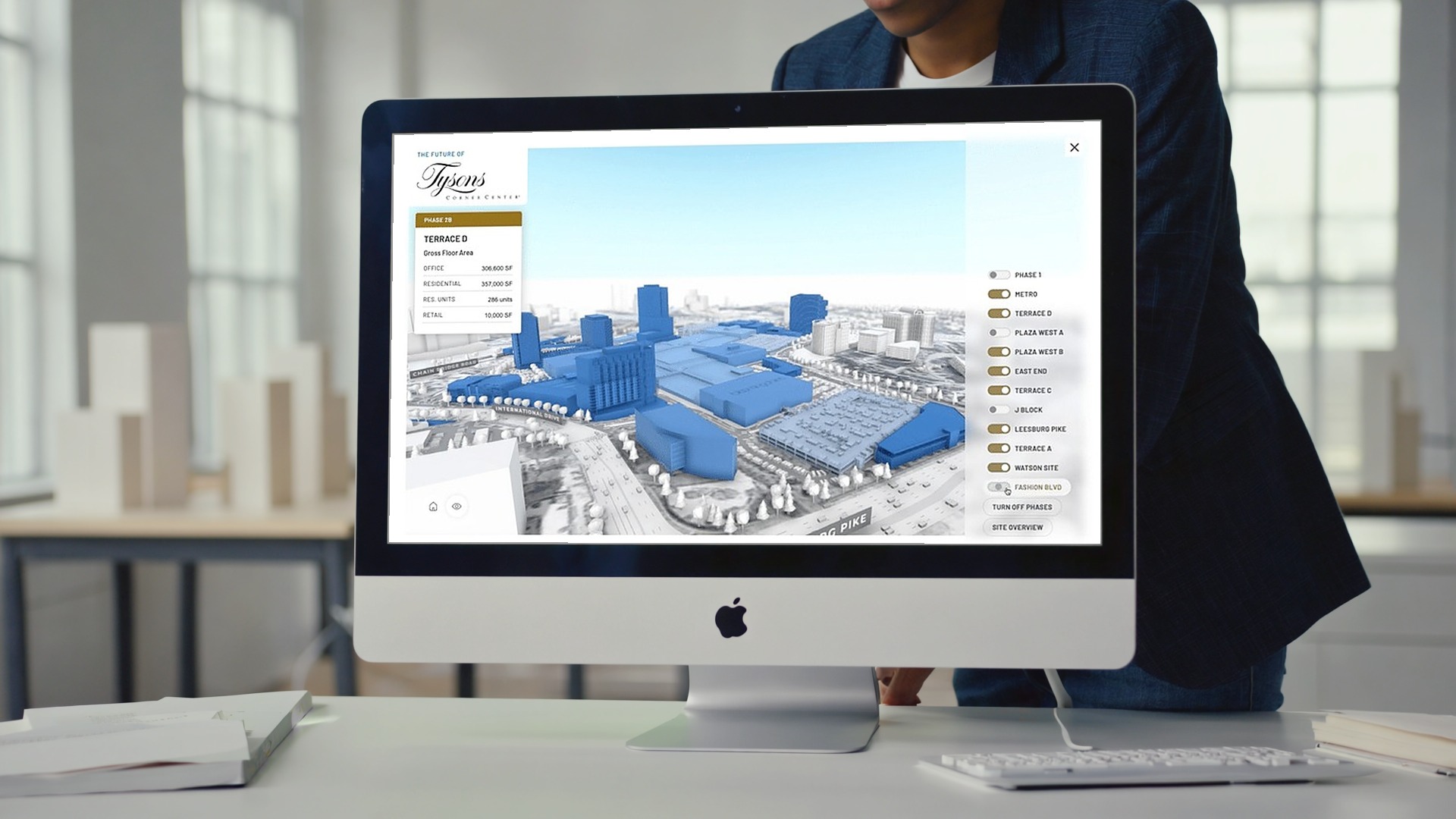
Macerich needed to show planners, tenants and the public both what exists at Tysons Corner Center today and what is planned next, in one place. For Macerich and HOK, Interface built Tysons Interactive, a web-based tour of the center that runs on the Unity game engine, the real-time technology behind today's video games: the computer draws each view as the visitor moves, so the visitor chooses where to go instead of following a set path. Visitors move across the whole campus, drop into 360° views from street level, and switch between the center as it stands today and the four to five phases planned around it, shown as simple massing models. Macerich's leasing and marketing teams use it, including as an in-office leasing kiosk, to tell the redevelopment story as it unfolds.
Over more than ten years of work on The Wharf, Hoffman Madison Waterfront used one 3D virtual reality environment of the whole Southwest waterfront, which Interface built and managed: to take the project through entitlement, to build awareness of its brand, and to market the project, including the building films for Amaris, Vio and 1000 Maine.
The real-time rendering page and the Innovation Lab's real-time virtual reality page go further into game-engine tours and headset walkthroughs.
What Developers, Owners and Brokers Use Interface's VR Work For
Interface's virtual reality real estate work is usually for one of four kinds of client:
- Developers and their sales and leasing teams, showing homes and amenities before a building is finished
- Office landlords marketing amenity floors, empty floors and renovations to tenants
- Brokerage teams that show a building, or a whole portfolio, from their desks
- Retail, venue and institutional owners showing a place to people who cannot easily visit it
How Interface Builds a Tour Around Who Will See It and Where
Most projects follow four steps, whether the result is a single tour or a portfolio of them.
- Purpose. We agree on who will see the tour, where they will see it (a website, a tablet in a leasing meeting, a headset) and which spaces it has to cover.
- Model or capture. Interface builds the 3D model of a space that is not built yet, or captures an existing space in 360, flying its own 8K 360 drone where the view from above matters.
- Tour, film or real-time build. Still panoramas are linked into a tour the viewer paces; a 360 film is rendered or edited along a set path; a real-time tour is built in a game engine.
- Delivery. The finished piece opens from a link, sits on the property website, or runs on a tablet or a headset.
Interface's VR Work in DC, Virginia and Maryland
Interface's studio is at 5425 Wisconsin Avenue in Chevy Chase, Maryland, and most of its VR work is in and around Washington, DC. In the District, that includes Amaris at The Wharf, 670 Maine Avenue, 901 New York Avenue, and Union Heights on the H Street corridor. In Virginia, it includes Monday Properties' office buildings in Rosslyn and Arlington, Ballston Quarter, and Tysons Corner Center and Capital One Hall in Tysons. In Maryland, it includes the Parexel film in Baltimore and Strathmore Square in the Grosvenor-Strathmore Metro area, where Interface made renderings, VR experiences and films for Fivesquares Development and WMATA.
"For us, architectural visualization is the bedrock upon which so many other marketing elements are built. "
Interface MultimediaDiscuss Your Project
30+ years of experience in the built environment. Let's talk about your requirements.
Projects Using This Service



Frequently Asked Questions
What is a 360 VR movie and how is it viewed?
expand_more
A 360 VR movie is an immersive video that surrounds the viewer in a full spherical environment, allowing them to look in any direction as the scene unfolds. It can be experienced through a VR headset for full immersion, or viewed on a desktop or mobile browser where the user drags to look around.
What is the difference between a 360 VR movie and a static 360 panorama?
expand_more
A static 360 panorama is a single frozen moment. The viewer can look around, but nothing moves. A 360 VR movie adds time: people walk through the space, lighting shifts, water features run, elevators arrive. A panorama tour suits a viewer who wants to stop and look at a room; a movie suits a space that is best seen in motion.
How long does it take to produce a 360 VR movie?
expand_more
A typical 360 VR movie of two to three minutes covering multiple spaces takes four to six weeks from model receipt to final delivery. The rendering pipeline is more intensive than standard video because every frame must be computed as a full spherical image. We plan production timelines around the client's leasing or event milestones.
Can 360 VR content be embedded on a property marketing website?
expand_more
Yes. Interface's newer 360 films stream from its own platform, which adjusts to the viewer's connection speed, and play inside the website with no plugin to install. For a headset at a leasing center or an event, Interface also delivers builds for Meta Quest and similar headsets.
What does Interface need to start a VR tour?
expand_more
Architectural drawings or a 3D model are enough to begin, and an early tour can start from a floor plan and a design direction.
Can the design team use VR experiences as well as the leasing team?
expand_more
Yes. At 1000 Wilson Boulevard, the VR tour and illustrations Interface made of Monday Properties' planned conference facility were meant for the leasing team, and the same work let the design and development team review the space and agree on the final finish selections before construction. Interface worked with Gensler on the project.
Does Interface make VR experiences for clients who are not leasing or selling space?
expand_more
Yes. For HOK, the architect that delivered Intuitive Surgical's new 850,000-square-foot facility to a Norman Foster design with KSH Architects, Interface produced 360 VR tours, animation and visualization. Intuitive used them in workplace change management, the work of preparing employees for a new workplace, to show its employees and recruits the character and quality of the facility.
VR Experiences in Washington DC, Maryland & Virginia
Interface Multimedia is headquartered in the Washington DC metro area, serving developers, architects, and institutional clients across DC, Maryland, Virginia, and nationwide. Our 30+ years of experience in the built environment means we understand the local market, regulatory landscape, and stakeholder expectations that shape projects in this region.
Whether you're developing in Tysons, Bethesda, Capitol Hill, Arlington, or anywhere in the Mid-Atlantic, our team delivers work that reflects the quality and precision your project demands.
Related Services
Architectural Rendering Services
Still renderings of the same spaces, from the 3D model a VR tour is built on.
Architectural Animation
Films that move through a building on a set path, for approvals, investors and leasing.
Real-Time Rendering
Game-engine tours and headset walkthroughs that the viewer steers.
Floor Plans for Real Estate
2D and furnished 3D unit plans to sit beside the tours on a property website.
Web Design Company in Washington, DC
Property and leasing websites that hold the tours, floor plans and walkthroughs together.
Multifamily Marketing
Naming, websites and lease-up campaigns for developers and owners of apartment communities.