

An envoy is a trusted representative: someone who understands who they represent, carries their knowledge and perspective, and acts on their behalf. That's the idea behind Envoy.
Envoy is an AI-assisted marketing platform built for real estate, architecture, engineering and construction firms. Marketing teams use it to build their website and manage its content in real time. They describe what they need, and Envoy builds it in the site's own template, ready to publish in seconds. It understands the organization, its properties and projects, its brand and the industry it works in. And because Interface builds the websites Envoy works across, it understands not only what to say, but where that information belongs and how it should appear.
Most AI tools are trained on everything and built for nothing in particular. They can draft a blog post for a law firm just as easily as they can describe a mixed-use development, and the results often feel that way: competent, but generic and disconnected from the organization they are supposed to represent.
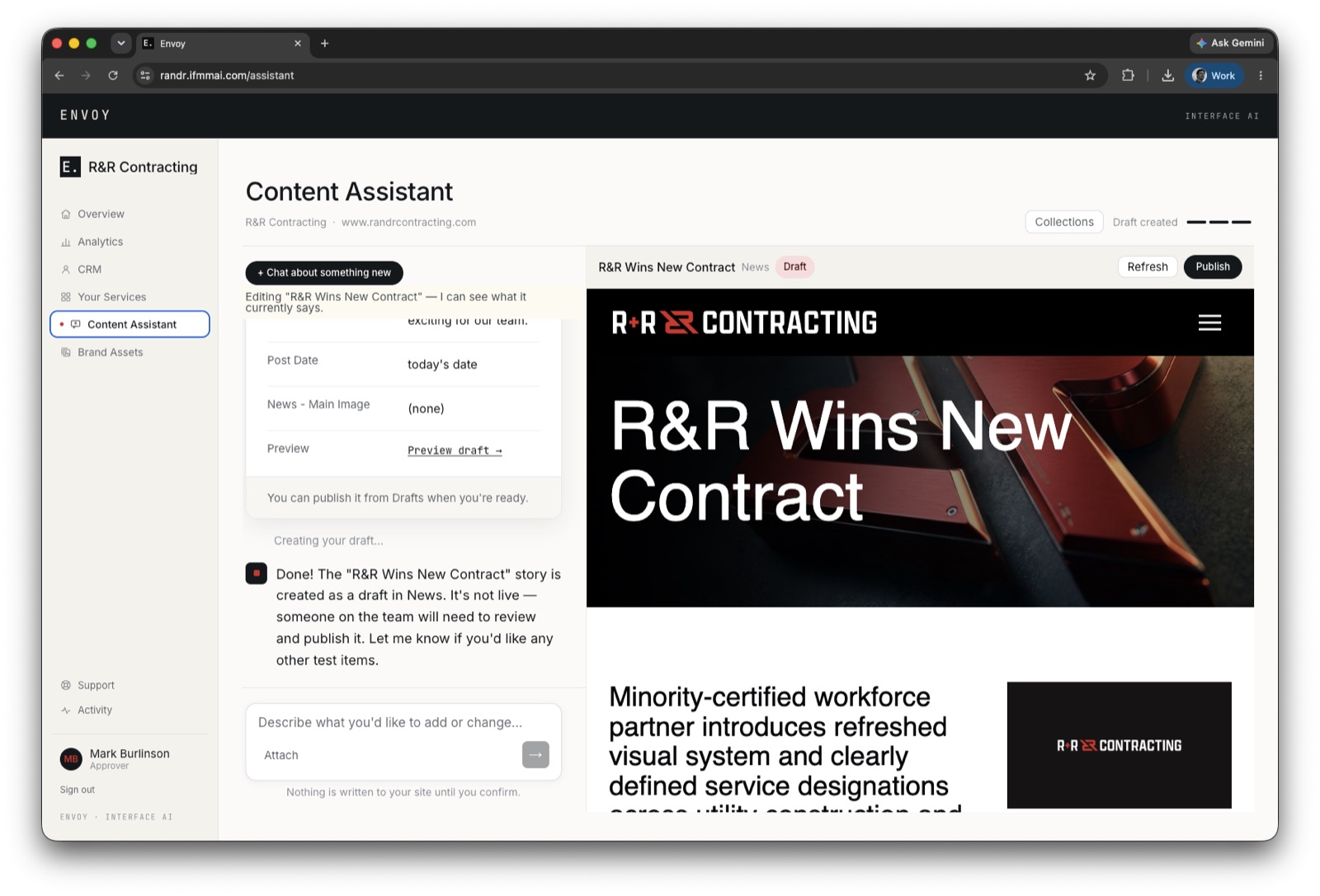
Envoy starts from the opposite direction. It is built around your organization and designed for the way real estate and AEC firms present their work. When Envoy prepares a change, you see the actual page as it will appear, not an approximation, and it can be live within seconds.
Powerful AI provides the capability. Envoy gives it context, purpose, and an organization to represent.
Your portal carries your brand
Each client team signs in to its own private portal, built around its brand and its websites. The first screen of the day shows what was published, what is in progress, which leads arrived and what deserves attention.

Describe it, and Envoy builds it
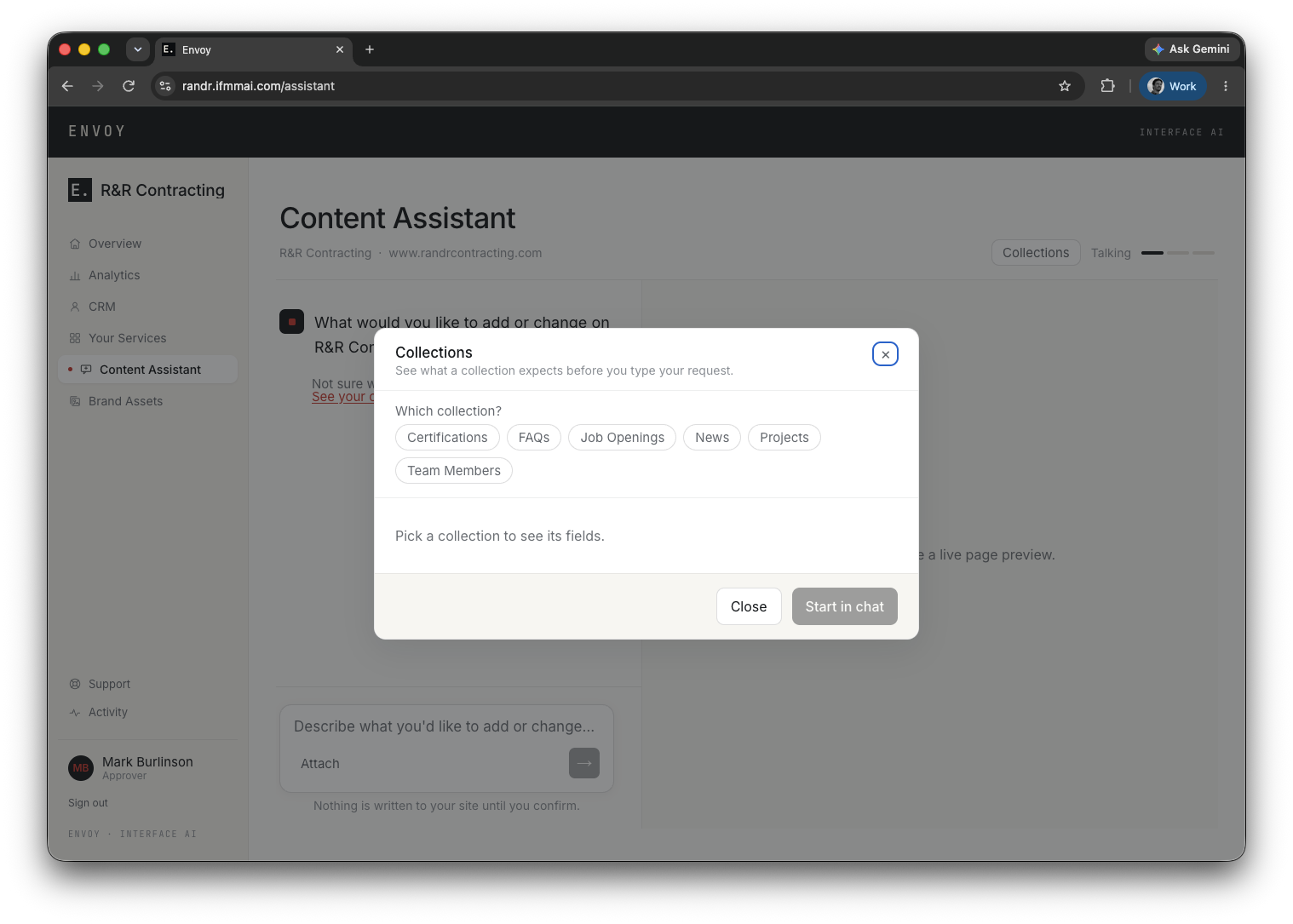
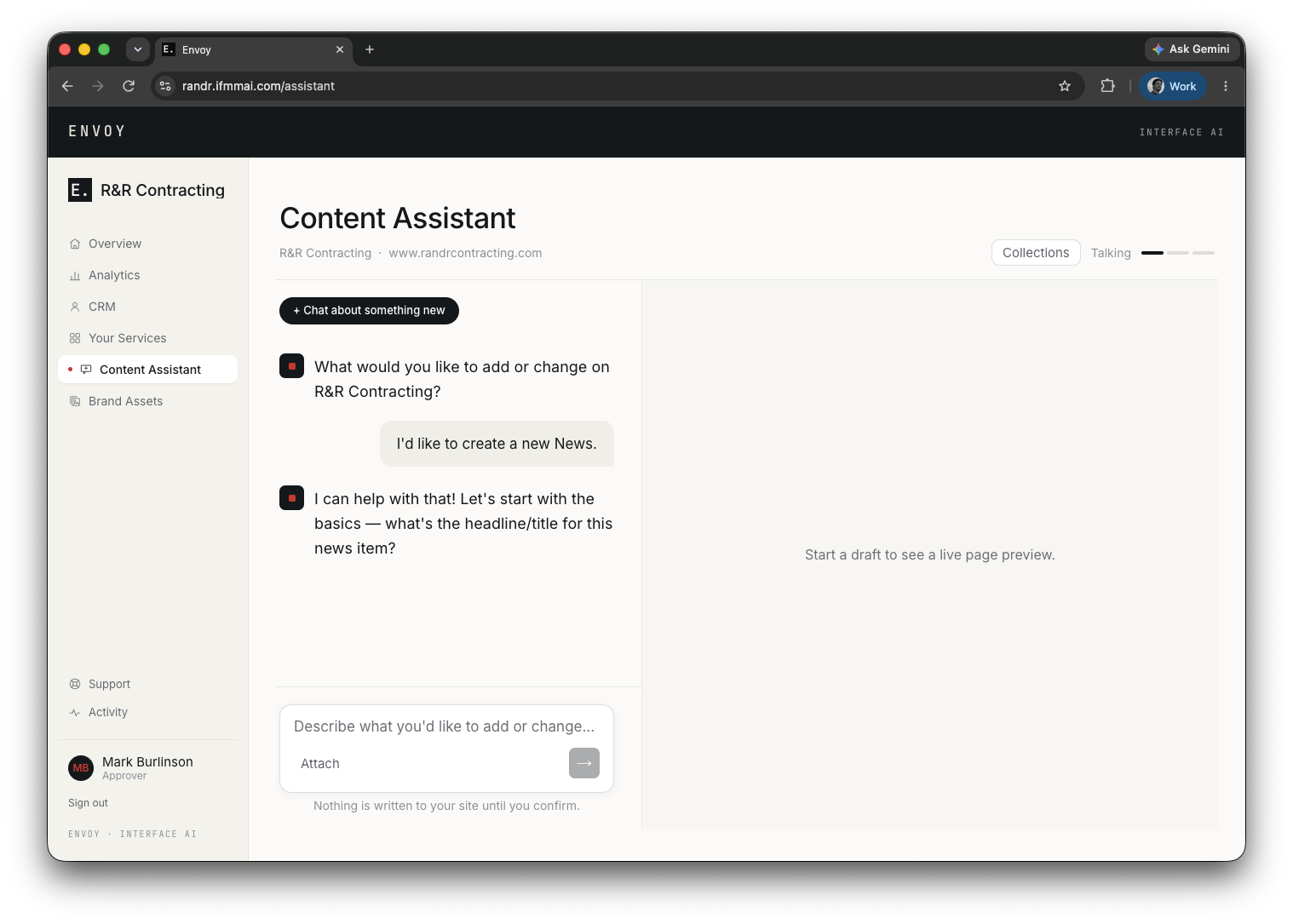
Anyone on the marketing team can describe what they need in plain language: add a new project, update someone's biography, publish a new insight, build a new section. Envoy asks for whatever is missing, or takes a document the team already has and organizes it into the right fields. It builds the page directly inside the site's own template, so what the team sees is the real page, not a form or a preview that approximates it.
It already knows who it represents
Envoy works from a knowledge network Interface keeps about each firm: its projects, the people behind them, its expertise, the language the brand has approved and the body of work already on the site. It also knows the site itself: which fields exist, how an image has to be sized, what form a link takes. That is why a draft about your newest project reads like it came from your firm, and why nobody on the team has to be trained on the website's backend. The change is almost immediate. The first time a team asks Envoy for a new page, the mechanics of the website stop being their problem.
Live in seconds
An edit made with Envoy can be published within seconds, and the site updates. It is as immediate as working inside the content system itself, without ever opening it. Roles are set per person and per site, contributors draft and approvers publish, so a regional office can prepare its own project page and the marketing lead can put it live.
The numbers point to what comes next
The same portal that carries your drafts also carries your numbers, with no second login. See where visitors come from and what they do once they arrive. Track which search terms are pulling people toward the site and understand what visitors have chosen to share. Envoy also tracks a new dimension of visibility: how leading AI engines answer questions about your firm, your expertise, and the markets you serve.
Learn more about Trust Authority

Envoy studies that reporting and raises recommendations in plain language, each one identifying the exact page it concerns and why it surfaced. A page that used to pull traffic and quietly stopped gets flagged. So does a search term climbing quickly that the site barely addresses. Each recommendation points to where the next hour of marketing effort could have the greatest impact.
The loop closes without leaving Envoy. Open a recommendation and it becomes a conversation, then a draft, then a page.
Leads land in the same place
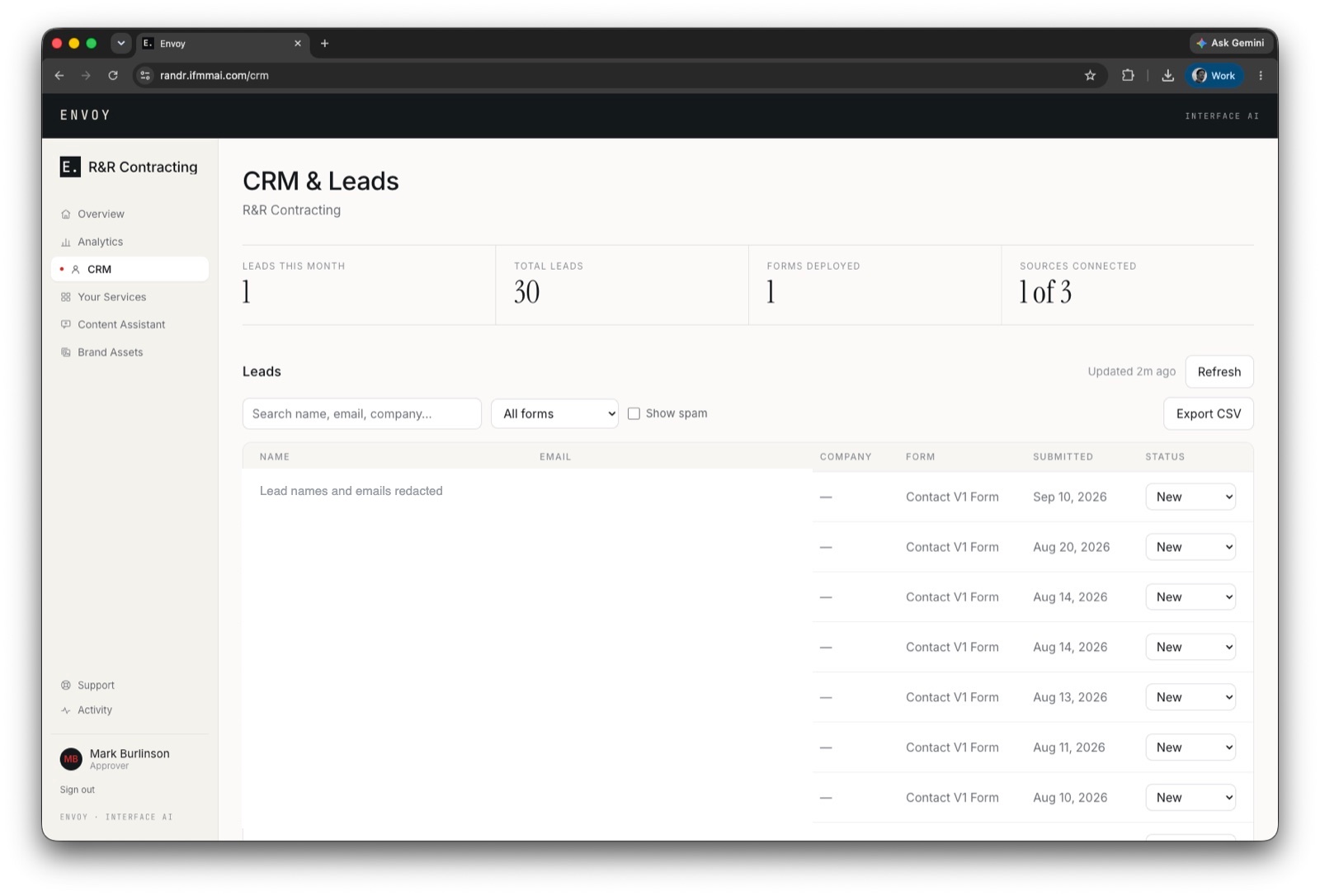
Website inquiries arrive in the same portal as named leads, each carrying the page and form that generated it. The marketing team can review, qualify, and track each inquiry, then hand the right opportunities to whoever manages business development.
Your brand library lives here too
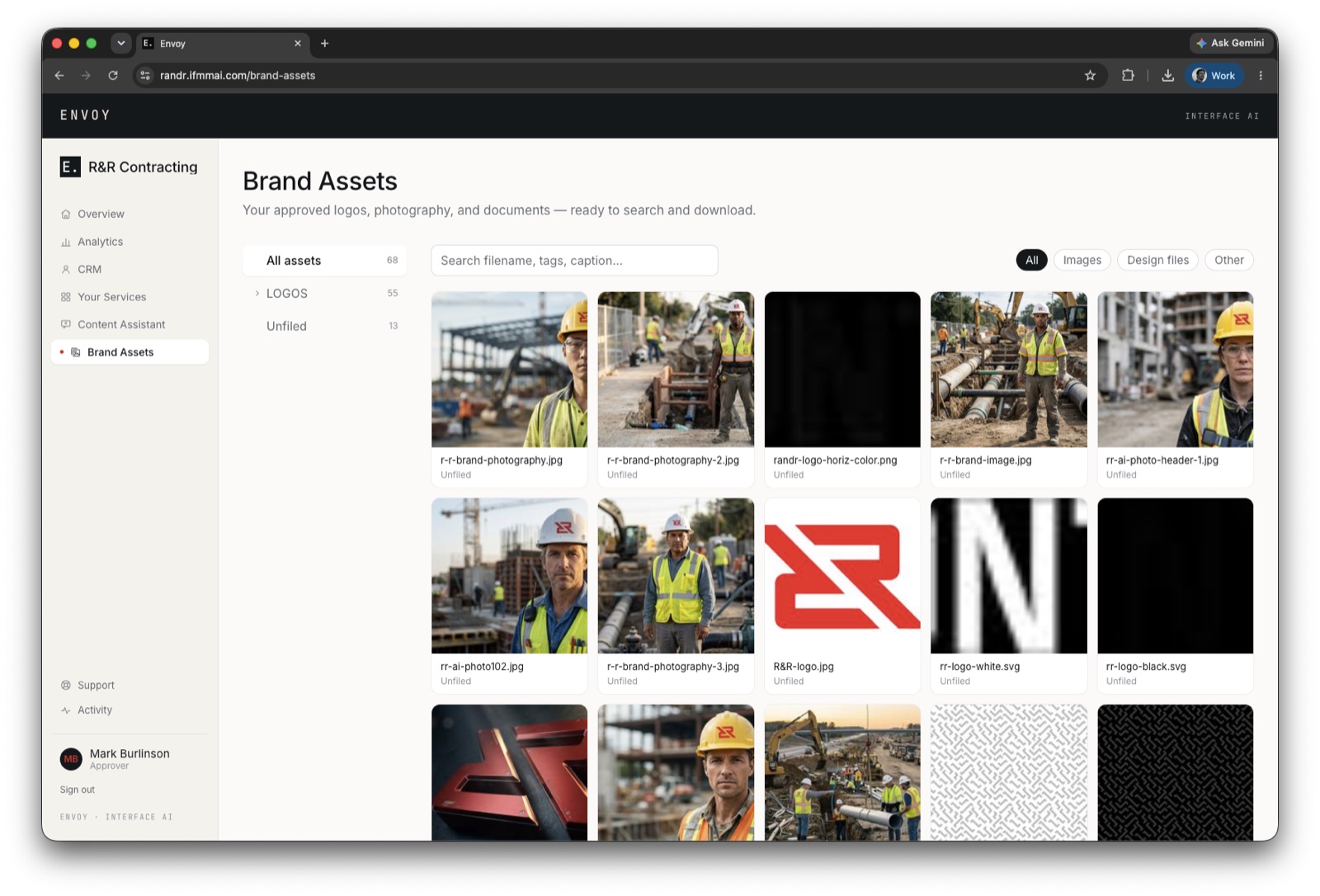
The portal also holds the approved brand imagery, logos, photography, and the files the team actually uses. Everything is organized and searchable, synced from the same library Interface's design team works from. Pull a logo from Envoy and it's the approved version, not an outdated file buried in someone's inbox.
One industry, on purpose
Envoy was built for one industry, on purpose. Real estate, architecture, engineering and construction firms present their work in ways a generic tool never learns: projects have locations and market sectors, leadership pages change when someone makes principal, awards arrive in seasons, and a pursuit deadline can suddenly make one page matter more than the rest of the site combined. Envoy knows all of that before the first conversation starts.