Beyond Blueprints: 4D Construction Animation in Project Management
A Gantt chart can tell a scheduler everything and a community board nothing. That gap is where construction projects get stuck: the plan is sound, but the people who need to approve it, fund it, or live next to it can't see what it actually means. Static blueprints and technical drawings weren't built to communicate the time-dependent reality of construction to anyone outside the trade.
4D construction animation closes that gap. It links a 3D building information model to the project schedule and animates the result, so a viewer watches the building come out of the ground in sequence: excavation, foundations, structure, envelope, fit-out, each phase where and when it actually happens. Interface has been producing these since 2010, from simple phasing diagrams to animations driven by 400-week, 10,000-activity construction schedules.
What the Animation Reveals That the Schedule Can't
The schedule knows the sequence; the animation makes it visible. Watching a project unfold exposes what flat documents hide. Two trades occupy the same zone in the same month. A crane position blocks the only truck route. Material staging collides with the phased occupancy plan, and the sidewalk closes for a month nobody flagged to the city. Teams find these conflicts on screen, where fixing them costs a meeting, instead of on site, where fixing them costs a change order.
The same visibility works outward. Funding committees, approval boards, and neighbors don't read critical-path diagrams, but everyone understands a movie. One animation becomes the shared reference point for the executive presentation, the trade-coordination meeting, and the community open house—three audiences, one unambiguous picture of what happens when.
Where It Has Mattered
The National Museum of African American History and Culture. When Clark Construction prepared its proposal to build the museum on the National Mall, they brought Interface in to help communicate the construction approach. We built a week-by-week animated 4D sequence showing how the building would take shape on one of the nation's most constrained and scrutinized sites: the deep below-grade excavation, the sequencing of the foundation work, the installation of the bronze-colored corona, and the logistics of keeping disruption to the Mall at a minimum. The visualization helped Clark win the project, then kept working as a planning and communication tool through construction.
Federal infrastructure. For projects including the FDA headquarters and the Coast Guard Headquarters, our 4D animations carried the phasing story to technical and non-technical stakeholders at once: traffic management during construction, utility relocation sequences, phased occupancy of active facilities, and the security considerations that come with sensitive government sites.
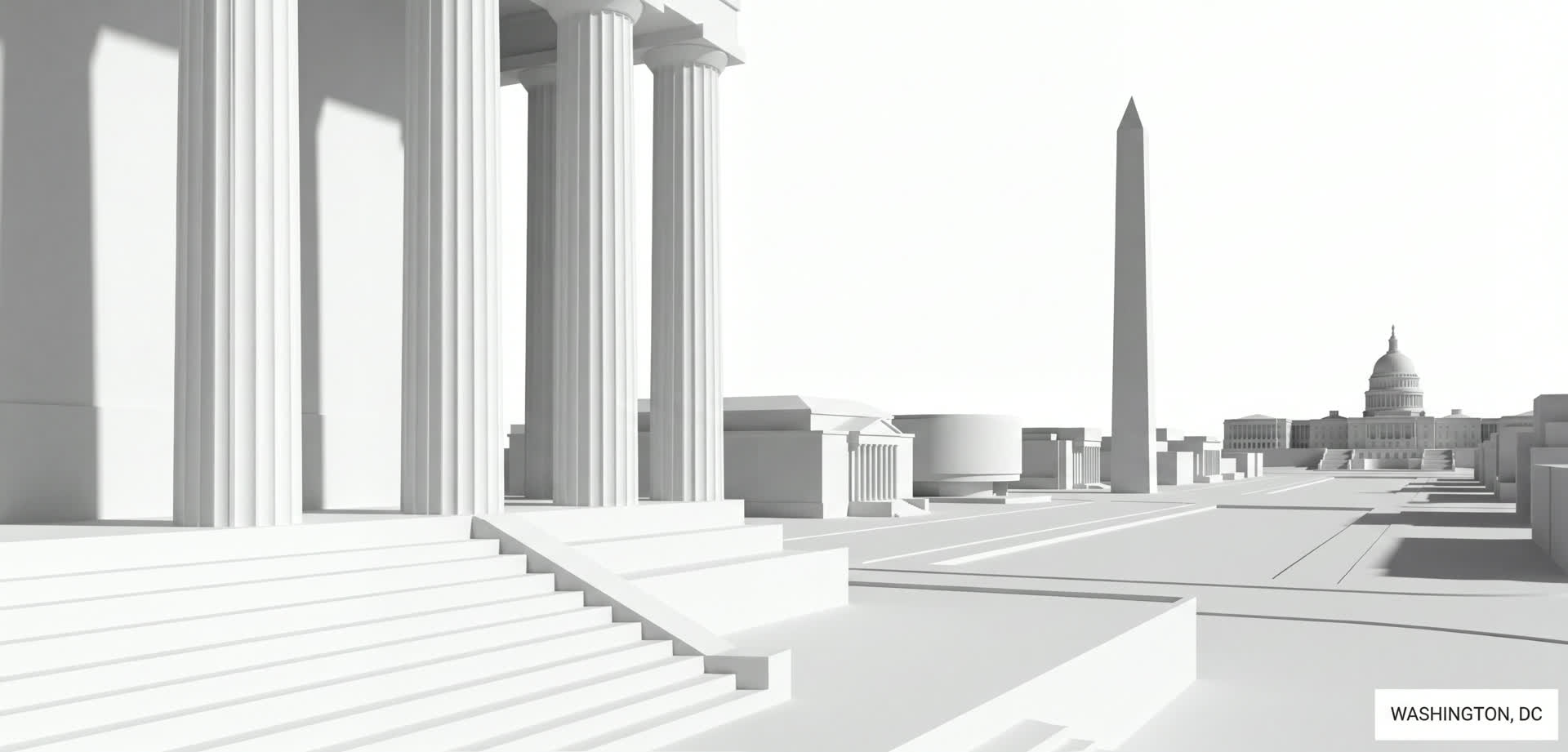
Historic fabric. Renovation work adds a constraint no new build has: the building you're protecting is in the way of the building you're doing. On projects like the Lincoln Memorial, 4D animation showed how modern construction activity would interact with historic fabric: what gets protected and how, where public access survives each phase, and how work proceeds in confined spaces where vibration itself is a risk.
Getting the Scope Right
Not every project needs the full treatment, and the fastest way to waste a 4D budget is to animate everything at the same level of detail. The questions that set scope: who is this for, and what decision does it support? High-level sequencing is enough for early planning and public communication, and medium-detail phasing covers trade coordination. Fully detailed activity animation earns its cost only on the genuinely complex areas: the critical path, the constrained site zones, the phases where the money is.
Two more lessons from years of this work. Build on what exists: a project with a BIM model and a live schedule is most of the way there, and the animation should stay consistent with both rather than becoming a parallel artifact. And plan for updates from day one, because construction plans move, and a 4D animation that still shows March's sequence in July is worse than none, because people believe it.
Where This Is Heading
The direction of travel is toward the animation staying live, fed by actual progress data and compared against the plan, drifting toward what the industry calls a digital twin. Web-based viewers have already removed the specialized-software barrier, which matters more than it sounds. A phasing animation the superintendent can open on a phone gets used; one that needs a workstation gets watched once. AI is starting to contribute on the analysis side, flagging schedule conflicts and suggesting resequencing, though on real projects today it assists the planner rather than replacing the planning.
We've watched 4D animation move from novelty to procurement advantage to, on complex public work, an expectation. The earlier the sequence becomes visible, the cheaper its problems are to solve.
Planning a project where the construction story needs to be understood by more than the construction team? Contact Interface Multimedia and we'll show you the NMAAHC sequence and talk through what your project needs.