The market for architectural rendering runs from a few hundred dollars for an offshore still to six-figure campaign packages for major mixed-use developments. Where a specific project lands depends almost entirely on four things: the complexity of what's being built, the quality of the source material you bring to the table, the scope of the visual campaign, and how many revision cycles the process consumes.
Most studios won't walk you through that honestly until you're already in a proposal. This article does, because a buyer who understands the drivers gets better work for the same money.
What the Market Looks Like
The spread in rendering prices reflects genuinely different things being produced. A budget-tier exterior still and a marketing-grade hero rendering are two different products that happen to share a name. The differences sit in scene complexity, modeling accuracy, lighting craft, entourage quality (the people, vehicles, and landscaping that make an image feel inhabited rather than technical), and the revision process that gets the image to the right answer.
For a single photorealistic exterior, the market runs from a few hundred dollars at the offshore commodity end to several thousand for a studio doing careful work in context. For a full visualization campaign (multiple exteriors, interiors, aerials, and potentially animation), institutional-caliber packages reach into the tens of thousands and above.
Who you hire is one variable. What you're asking for, and what you hand them to work with, move the number just as much.

What Actually Drives the Number
Four levers move a rendering quote. Understanding them tells you where your budget is going, and where you have real control.
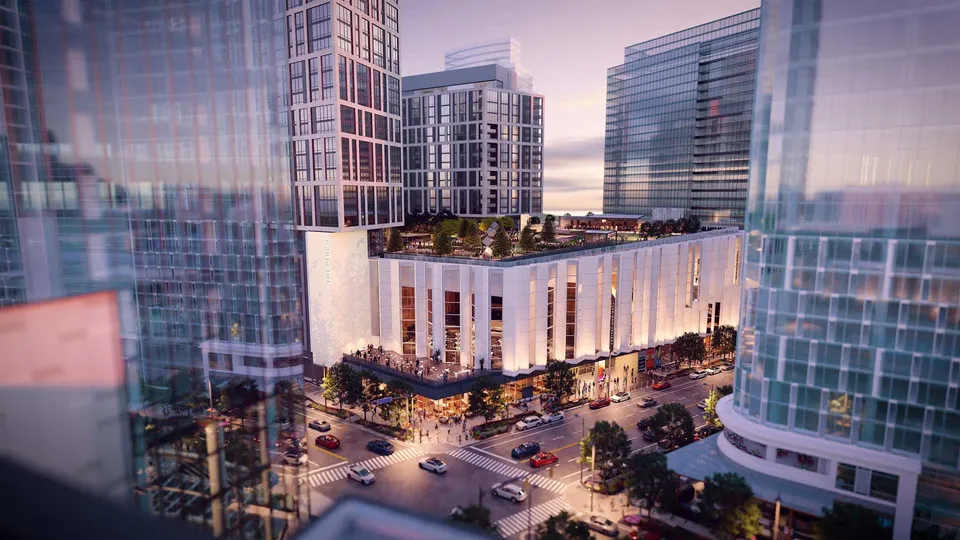
Scene complexity. A building on a clean suburban site is one scene to build. The same building in a dense urban streetscape means adjacent towers, layered context, retail activity, and custom landscaping, every one of them modeled and art-directed. Entourage (the people, cars, and plantings that make an image feel like a place) is actual modeling and art direction work, not a post-processing filter. When a client sees two quotes far apart on what looks like the same building, the scene complexity question is almost always the explanation.
Source material quality. This is the cost driver buyers underestimate most often, and it's entirely within the client's control. A clean, coordinated model (Revit, SketchUp, Rhino, or well-organized CAD) with material selections made and site context established lets the studio spend the budget on rendering quality. Arriving with early-stage drawings, unresolved geometry, or missing material specs means you're paying the studio to make decisions a designer hasn't made yet. Every hour of modeling archaeology is an hour not spent on the image. We work from Revit models, SketchUp files, Rhino geometry, and CAD drawings; the cleaner the inputs, the more the investment lands in the final product.
Scope and number of views. The first view of a scene carries the cost of building the entire 3D world. Each additional view from that scene is incremental: a different camera angle, a dusk variant, a night version showing the lighting design. This is the most important piece of budgeting intelligence for a developer planning a package: the second image from a scene costs a fraction of the first. Planning your full shot list before work begins, rather than adding views as approvals evolve, is where real money is captured or lost.
Plan your shot list upfront
Clients often arrive with a 30–40 image list of elements they want to render and a budget for 5–8 views. We have found it is important to ask what is difficult for the neighborhood, tenant, or buyer to understand that a rendered image can clarify. These are the images in which you want to invest your time and money.
Sharing the budget
Most clients are reluctant to share either a specific budget or a specific shot list. One or the other is essential. With a specific budget and an understanding of the challenges the rendering is meant to support we can work with you to identify the best path forward.
There is rarely a drawing that is not useful. It is remarkable how often clients send us only a few drawings to work from. Send us everything! We'll work faster and have far fewer questions.
Timeline and revision discipline. A typical exterior hero rendering takes two to three weeks from model receipt to final delivery, including two rounds of revision. Interiors generally take one to two weeks each; packages with animation or VR components run four to eight weeks. Compressed timelines are usually manageable, but rush work carries a premium. The silent budget killer in any engagement is unconsolidated feedback: ten stakeholders submitting notes in separate threads across multiple weeks burns revision rounds fast. One round of comments from a single informed voice is worth more than three rounds from a committee. For the complete process and turnaround FAQ, see our architectural rendering services page.

When Cheap Renders Cost More
There's always a cheaper quote available. Sometimes taking it is the right call; a schematic massing study doesn't need photorealism. But for images that will face an investment committee, a zoning board, or an active leasing market, the low bid carries specific, concrete risks.
The redo cost. The most expensive rendering is the one you pay for twice. If the first version isn't credible enough to deploy (the geometry reads wrong, the entourage looks generic, the lighting is flat), the money is gone and the schedule with it. The premium for doing it correctly the first time is almost always less than the premium for doing it over.
The credibility discount. Sophisticated audiences have seen thousands of renderings. Lenders, institutional investors, and planning commissions calibrate their read of a development team partly on the quality of the materials presented. An image that looks offshore, geometrically imprecise, or compositionally generic quietly signals something about how the team operates. Our rendering work for the Smithsonian's Steven F. Udvar-Hazy Center helped the institution secure a $60 million donation. That outcome required imagery credible enough to function in a capital campaign, not just to illustrate a building.
The approval risk. In entitlement settings, a rendering that misrepresents the project, even optimistically, can become a public liability when the built result diverges from what a community was shown. Accuracy in contextual renderings is exposure management as much as aesthetics.
The single-use trap. Studios at the low end of the market typically deliver one flattened image at web resolution. Without print-resolution files and layered source formats, every downstream use means returning to the vendor or starting over: the construction fence banner, the offering memorandum, the website header at a new aspect ratio, the design revision six months later. We deliver in TIFF, PNG, JPEG, and layered PSD formats as standard, because the images a client buys should serve every use case the project encounters, not just the one that existed at the moment of delivery.
The honest question for any rendering budget isn't "who's cheapest." It's "what does this image need to accomplish, and what does it cost if it fails to accomplish it?"

How to Think About Budgeting by Project Type
The useful budgeting question for a developer or CRE marketer: what does the visual campaign for this project need to be, and where does it carry the most weight?
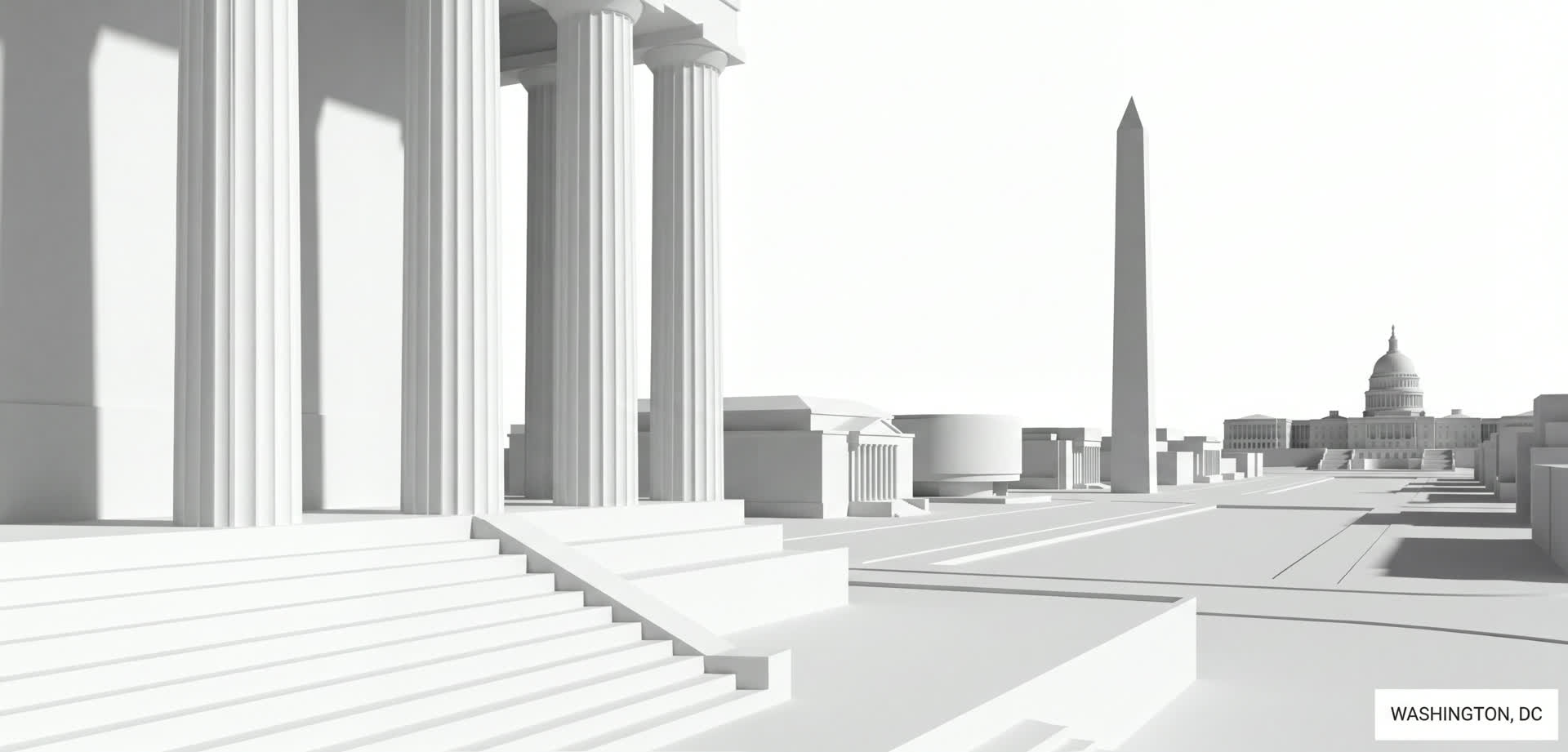
Entitlement and zoning. One to three exterior views showing the project accurately in its neighborhood context, often from specific vantage points a zoning board or community group will request. Accuracy matters more than glamour here. Camera-matched renderings that align with existing site photographs are particularly effective in public hearings because they allow direct comparison with the current condition. We've produced these for projects throughout DC, and the credibility of contextually accurate imagery in approval settings is not theoretical.
Capital raise and investor presentations. A hero exterior, one or two interiors of the spaces that define the investment thesis, and, for larger or more complex raises, an animation or aerial that communicates scale and relationship to the surrounding market. This is where visualization carries direct financial weight. The Smithsonian work above lives in this category; so does our work supporting competitive proposals, partnership presentations, and institutional capital campaigns. These images need to be credible to audiences who make large financial decisions based partly on what they see.
Pre-leasing and development marketing. The widest package: multiple exteriors covering key street frontages and neighborhood context, amenity and common area interiors, unit or suite types, and increasingly an interactive or 360° VR piece that lets prospects explore independently. These images will populate every marketing deliverable produced for the duration of the campaign: the website, the brochure, the construction fence, the trade show graphic, the investor deck update. Because they're reused across years and formats, investing in print-resolution delivery and layered source files pays back the marginal cost many times over.

The Wharf imagery was used during the entitlement process but more importantly as part of hundreds of community meetings. The hero shots paint the big picture, but countless little details show how the project meets its neighbors.
Institutional and public projects. Complexity tends to be higher: phased programs, multiple stakeholders with different interests in the same image, and often a longer design review cycle that produces rendering updates as the design evolves. We've worked on projects of this type since 1993, including Kennedy Center and Capital One Center. The practical value of a studio that reads construction documents natively and understands the design review process is that fewer revision rounds are spent correcting modeling errors or reinterpreting design intent—that time goes into the image instead.
The Howard County Circuit Courthouse is a good example of that value in practice. We worked with an RFP-winning design-build team (Clark Construction and HOK) using the same 3D model assets to create both a combination of illustrations and animation on the design side and a phased construction diagram on the build side. One set of model assets serving both the design and build sides of the team: that's where the real efficiency lives on complex public projects.

Quick Answers
What does an architectural rendering cost?
A single photorealistic exterior rendering from a professional studio
typically ranges from $2,000 to $8,000, depending on the project's
complexity, the number of views, the depth of site context, and the
timeline. The range is wide because the product varies. A
straightforward suburban facade is a different scope from a complex
urban corner with custom entourage.
What does a full architectural rendering package
cost?
A full package for a mixed-use development, covering multiple exterior
views, interior spaces, and aerials, typically ranges from $15,000 to
$50,000 or more, with scope and format mix (still, animation, VR)
driving where the final number lands. Large institutional or
campaign-level visualization programs fall above this range.
What drives the cost of a rendering up or
down?
Four factors: the complexity of the scene (how much context, entourage,
and custom lighting work is required), the quality of the source model
and materials you provide, the total number of views and formats, and
the timeline, including how many revision rounds the process consumes.
The cleaner your inputs and the more consolidated your review process,
the more of your budget lands in the final image.
How long does an architectural rendering take?
A single exterior hero rendering typically takes two to three weeks from
model receipt to final delivery, including two rounds of revision.
Interior renderings generally take one to two weeks each. Complex
packages incorporating animation or VR components run four to eight
weeks. Timelines compress when source files are clean and client
feedback arrives consolidated.
How can I keep rendering costs manageable?
Provide organized source files (Revit, SketchUp, Rhino, or CAD) along
with material selections and site reference before work begins. Plan
your complete shot list upfront; additional views from an existing scene
cost a fraction of a new scene. Consolidate stakeholder feedback into a
single voice for each review round. These three practices do more for a
rendering budget than negotiating the rate.
We've been producing architectural visualization since 1993—more than 2,000 projects, from single hero renderings for zoning hearings to full visualization campaigns for major institutional developments. If you're budgeting visuals for a project, we're glad to talk through what a package should look like before anyone writes a formal proposal.