
Augmented Reality vs Virtual Reality: What Real Estate Developers Need to Know
Real estate developers can use augmented reality (AR) and virtual reality (VR) to create more impactful and memorable experiences for their prospects. But how do these two technologies differ? And how do real estate developers decide when and if to use them for their properties?
In this post, we’ll walk through the key differences between AR and VR and provide guidelines for how to decide when and if to use them for your real estate properties. As experts in all things ArchViz, we have the tools and the expertise to assist you with all of your real estate marketing needs. But first, let's consider which tools your project may benefit from most!
What is Augmented Reality?
Augmented reality is a technology that allows for the blending of virtual elements with the physical world. More specifically, AR technology uses computer vision, machine learning, and sensors to identify and track real-world objects and surfaces, and then overlay virtual elements onto them. By adding digital content to the real world, the user interacts with the environment in a richer way.
For example, an augmented reality app could be used to place virtual furniture in a room so that a potential buyer can have a better visual of how it might look once they move in. This type of technology is also great for creating interactive experiences such as virtual tours, where users can explore a property with the help of a guide. We have worked with clients to use similar technologies for virtual staging.
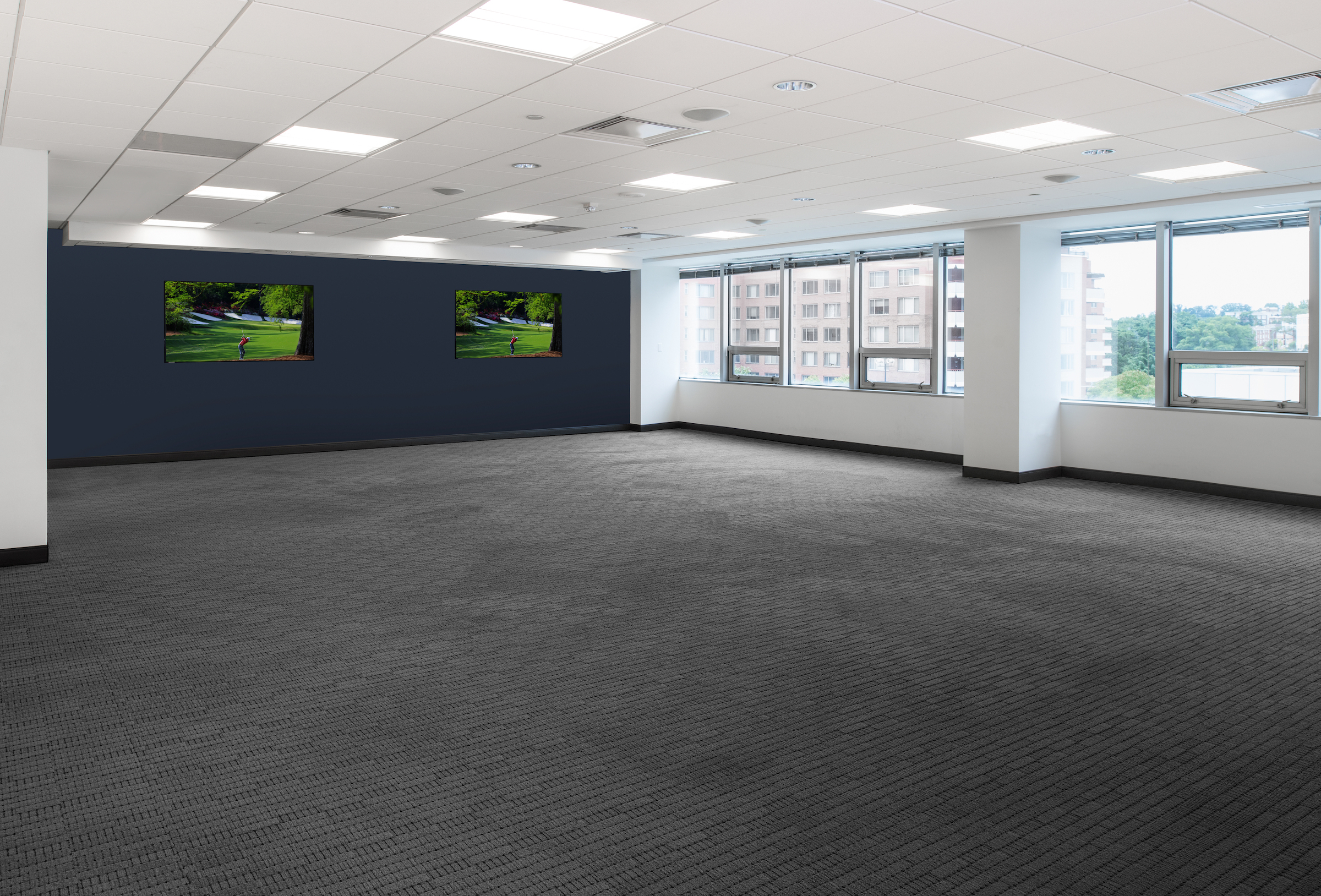

We assisted Monday Properties to virtually stage a commercial property they wanted marketed.
Virtual staging and augmented reality are crucial for properties such as this one because they can highlight the various possibilities of a space without the hassle or restriction of a single staged design. We could create hundreds of staged layouts for our clients were they to need it, and do it at a fraction of the cost (and labor) of an actual staging company. These benefits are particularly important in commercial properties as the properties can serve many uses and may need to be marketed towards various audiences.
What is Virtual Reality?
Virtual reality is a computer-generated simulation of a three-dimensional environment that users can interact with and explore. Unlike augmented reality, virtual reality creates an entirely simulated world, allowing the user to be fully immersed in the experience. More specifically, VR technology works by using sensors, cameras, and advanced computer graphics to create a realistic, immersive experience for the user. The user's movements and actions are tracked and translated into the virtual environment, allowing them to interact with digital objects and move around within the simulated space. This technology can be used for many things, but has become integral in the real estate market.
For real estate developers, virtual reality can be used to create virtual “open houses” or “model homes” that prospects can explore without actually visiting the property. It’s also great for creating interactive experiences, such as virtual tours that let prospects explore the property room by room.
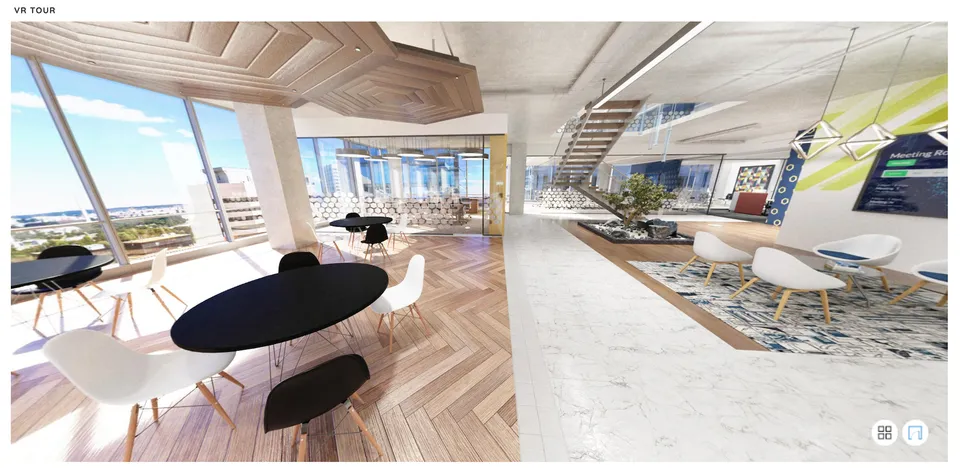
Interface worked with Hoffman Madison Waterfront to create VR tools to visualize 670 Maine at the Wharf in DC. These VR tools were used to create an immersive experience that could effectively market the commercial office spaces nestled among the mixed-use environment that was under-way at the District Wharf.
Virtual reality tools and tours are valuable resources for marketing various types of spaces. We have worked with companies to market commercial office spaces, multi-family housing properties, individual apartment units, entire retail environments, and much more.
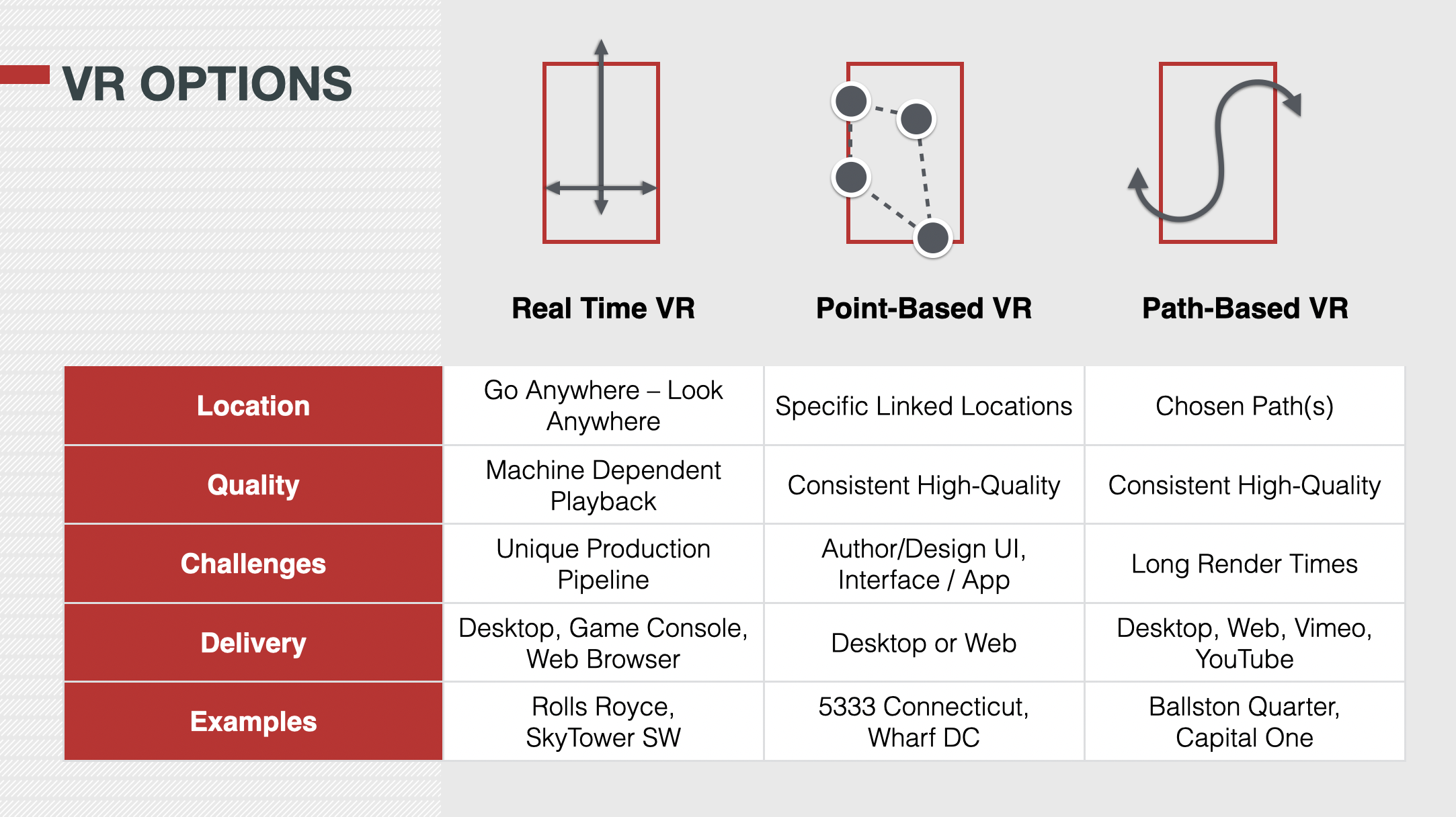
There are many definitions and names for the various types of virtual reality. At Interface, we like to think of VR in three different ways: real-time VR, point-based VR, and path-based VR. We have created this simple graphic to help cover the basics of each type of VR and how they operate.
How to Decide When and If to Use AR and VR for Your Real Estate Properties
When deciding when and if to use AR and VR for your real estate properties, there are a few key factors to consider:
- Goal: Consider what you want to achieve from either tool. VR is a fully immersive technology that allows users to enter a completely virtual world, while AR overlays digital information onto the real world. In real estate, VR can provide a completely virtual tour of a property, while AR can enhance the real-world experience by superimposing digital information onto it.
- Project Stage: The stage of the project you are trying to enhance using AR or VR may dictate which is more effective. In real estate, VR can provide a fully interactive experience of a property, while AR can provide additional information and interactivity to the real-world experience. AR performs using mostly real-world environment; if your project is complete and you want to highlight a change to its current reality, AR may be more beneficial. Alternatively, if you are trying to promote a project that isn't yet complete or open to viewings, VR may be more beneficial as it is completely virtual and can help visualize the final product.
- Target Audience: Consider who your target audience is and which experience serves them better. AR can enhance your audience's understanding of a property by providing them with up-to-date information. VR can give your audience a firsthand feel for a property they may not be able to visit in person.
The decision usually comes down to those three factors and the scale of your budget, and it can be worth piloting either technology on a single listing before making a larger investment. The short version: VR builds a world for a property that can't be visited yet, and AR adds to the one that already can.